.png?width=501&height=92&name=Overtel%20Logo%20Postivo%20(7).png "Logo Corporativo Overtel Technology System S.L.")
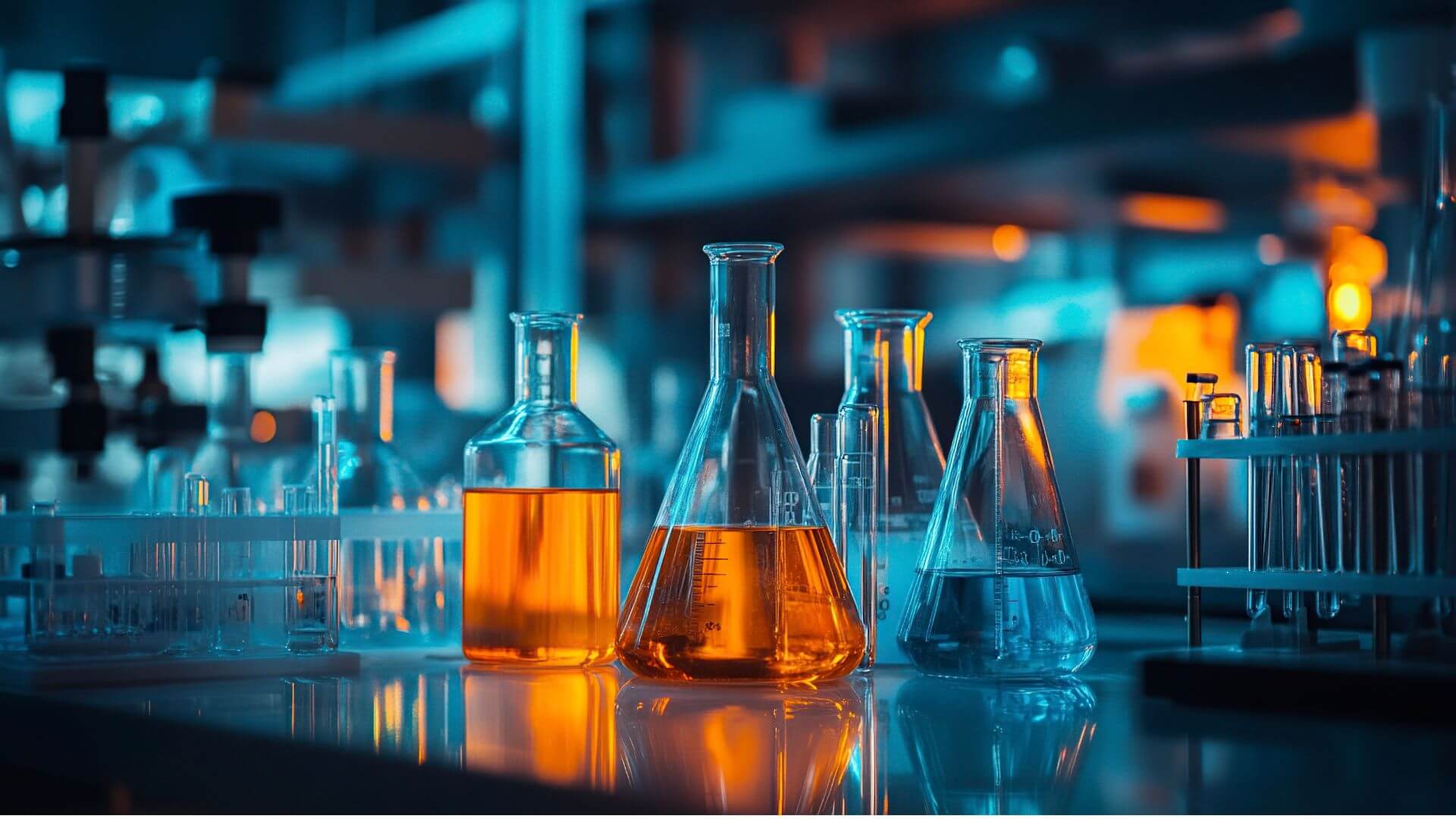
The chemical industry is facing a decisive decade. With the arrival of 2026, the sector will undergo a transformation marked by digitalization, intelligent automation and increasingly demanding regulatory compliance.
In this article, we look at the key technologies for the chemical industry in 2026 and how to apply them in a practical way to generate real impact on the shop floor. From systems integration to the use of artificial intelligence and specialised ERP.
Why 2026 will be a turning point for the chemical industry
Regulation, sustainability and global competitive pressure
The global chemical industry faces a decade of radical transformation. Looking ahead to 2026, factors such as environmental regulation, the need for greater traceability, compliance with regulations such as REACH and CLP, and pressure from customers and investors to adopt sustainable practices are driving a structural evolution. Companies that do not adopt a model based on data, efficiency and transparency risk being priced out of the market.
Digitalisation and automation as a strategic advantage
Digital transformation in the chemical industry is no longer an option, but a necessity. Technologies such as industrial IoT, specialised ERP/MES systems and artificial intelligence make it possible to automate critical processes, predict failures and make decisions in real time. This not only improves efficiency but also strengthens the competitive capacity in the face of changes in the environment.
Beyond productivity, the strategic objective now is resilience. A digitised chemical industry can adapt quickly to regulatory changes, logistical disruptions or supply crises. Digitalisation is the cornerstone of this agility.
Integrated digital ecosystems and 360° chemical business management
For years, production, quality, purchasing or maintenance departments have worked with disconnected systems and data. In 2026, the dominant approach is integrated digital ecosystems, where information flows between areas and enables faster, more accurate and collaborative decision-making.
Specialised ERP for the chemical industry
A generic ERP does not cover the critical needs of the industry: formulation management, batches, quality control, regulatory compliance, traceability or environmental control. A specialised ERP for the chemical industry, like RPS Next is designed to meet these challenges, offering flexibility, integration and compliance from product design to delivery.
Achieving a 360º vision of the chemical business means having a real-time view of the entire operation: from raw materials to the end customer. This makes it possible to anticipate risks, optimise resources and improve competitiveness.
Artificial intelligence and advanced analytics for industrial decisions
Artificial intelligence for industrial decisions is not a future promise, it is a present reality. By 2026, chemical plantswill have intelligent systems that improve production planning, detect quality deviations and optimise maintenance based on predictive data.
Advanced predictive analytics in the chemical industry makes it possible to adjust production parameters in real time, minimise waste and maximise yield. Thanks to the use of big data and predictive models, it is possible to simulate scenarios and anticipate impacts.
From automatic report generation to virtual assistants for operators, generative AI will play an increasing role in chemical plants, automating support tasks and improving the equipment experience.

Intelligent automation, IoT and predictive maintenance
Industrial automation in chemical plants is key to ensuring product consistency, operational safety and regulatory compliance. Robots, PLCs and SCADA systems are evolving into connected cyber-physical environments.
The incorporation of IoT sensors in equipment and production lines enables continuous monitoring of facility status. This data feeds advanced analytics systems and improves reaction to deviations or failures.
Predictive maintenance in chemical plants, based on data and AI algorithms, makes it possible to anticipate breakdowns and plan interventions without affecting production. This reduces costs, improves safety and extends the useful life of assets.
These capabilities are enhanced with MES/MOM solutions.
Full traceability and real-time regulatory compliance
Full traceability is a legal and market requirement. Managing batches from formulation to delivery, with auditable digital records, is essential for customer confidence and operational efficiency.
Regulatory compliance (REACH, CLP, ESG) in the chemical industry requires systems that ensure consistency between production, labelling, safety and sustainability. Having software that automates controls and documentation reduces errors and avoids penalties.
In addition, emerging technologies such as blockchain and digital twins reinforce traceability and transparency. Digital twins make it possible to simulate processes and optimise operations before implementing them in the plant.
Industrial sustainability and circular economy as a strategic focus
Industrial sustainability in the chemical sector can no longer be addressed from estimates or generic statements. It requires accurate measurement of key indicators such as energy consumption, emissions and waste generation throughout the production process. To this end, it is essential to have connected data systems that allow these variables to be monitored in real time, identify inefficiencies and reduce environmental impact on an ongoing basis, while meeting ESG objectives.
Moving from talk to action in corporate sustainability requires reliance on technology. Automating reports, defining environmental KPIs and integrating these data into management systems makes it possible to demonstrate a real commitment to sustainability and make more responsible decisions based on reliable and up-to-date information.
In this context, technology becomes the real driver of the circular economy in the chemical industry. Thanks to digitalisation, it is possible to optimise the use of resources, reduce waste and promote the reuse of materials, closing the production cycle efficiently. Data and digital systems act as enablers of this paradigm shift, driving more sustainable and competitive production models.
Resilient supply chain and end-to-end visibility
The digitisation of the chemical supply chain enables companies to better manage their suppliers, proactively assess risks and optimise purchasing processes. A specialised ERP provides advanced tools to make logistics more efficient, traceable and aligned with industry requirements. Having real-time data on stock levels, transportation, suppliers, or distributors is key to anticipating problems and making agile decisions in the event of any incident. This end-to-end visibility is essential for planning with certainty and ensuring operational continuity.
Recent years have tested the resilience of the industry. Pandemic, logistics crises and increasing geopolitical volatility have shown that only organisations with digital, flexible and auditable supply chains are able to adapt quickly and maintain stability in uncertain environments.
How to prepare your chemical company for 2026
1) Digital process and systems diagnostics
The first step is to know the starting point: assess digital maturity, integration between systems, bottlenecks and traceability capacity. At Overtel, we accompany chemical companies in this analysis.
2) ERP, MES, data and automation integration
Technology must be at the service of strategy. With solutions such as RPS Next (ERP) and MES/MOM INEXION, we can execute the digital strategy in the plant, connecting production, quality, data and business.
3) From strategy to actual technological execution
We don't just design digital roadmaps: we implement them. Thanks to our expertise in IT/OT integration, industrial automation and data governance, we turn strategic plans into real, measurable and sustainable results.
In 2026, the chemical industry will be defined by its technological adaptability. Companies that integrate digital tools, artificial intelligence, automation and sustainability into their daily operations will be the ones that set the course for the sector. At Overtel, we help you make this transformation a reality.
Contact us and start transforming your chemical plant with real technology and visible results.